Buying Guide
How to Choose a Wholesale Scarf Manufacturer in China
Choose a wholesale scarf manufacturer by checking product range, sample quality, MOQ flexibility, material documentation, label options, packing control and communication speed. A low quote is not enough unless the factory can repeat color, size, hand feel and delivery timing in bulk production.
Buyer Takeaways
- Check whether the factory can make scarves, beanies, gloves, wraps and gift sets under one program.
- Compare MOQ, sample time, bulk lead time, label options and packing details together.
- Ask for real product photos, material details and inspection checkpoints before approving a sample.
- Treat communication speed and quotation clarity as part of supplier quality.
Choosing a wholesale scarf manufacturer in China is not a price-shopping exercise. It is a risk-control decision for your retail season, your private label program and your customer promise. A supplier may quote a low unit price, but the real question is whether that supplier can repeat the same scarf in bulk with stable color, controlled size, correct labels, clean packing and a delivery schedule your business can use. For scarves and winter accessories, small details become large problems very quickly. A scarf that is two centimeters short, a label sewn in the wrong position, a pile fabric that sheds after unpacking, or a color that shifts between lots can damage the whole order.
Buyer decision table
| Decision area | Strong supplier signal | Risk signal |
|---|---|---|
| Product range | Can explain scarves, beanies, gloves, wraps and gift sets with construction differences | Only sends a price list without product guidance |
| MOQ | Explains MOQ by material, color, label and packing scope | Promises any MOQ before seeing the artwork or packaging requirement |
| Sampling | Defines size, yarn, color, label position and packed sample standard | Uses only mockups or catalog photos for approval |
| Compliance | Can discuss BSCI, OEKO-TEX or GRS scope honestly | Uses certificate names as marketing words without documents |
| Communication | Asks for quantity, deadline, market and packing details before quoting | Quotes only one number and ignores destination or lead time |
Start with product fit
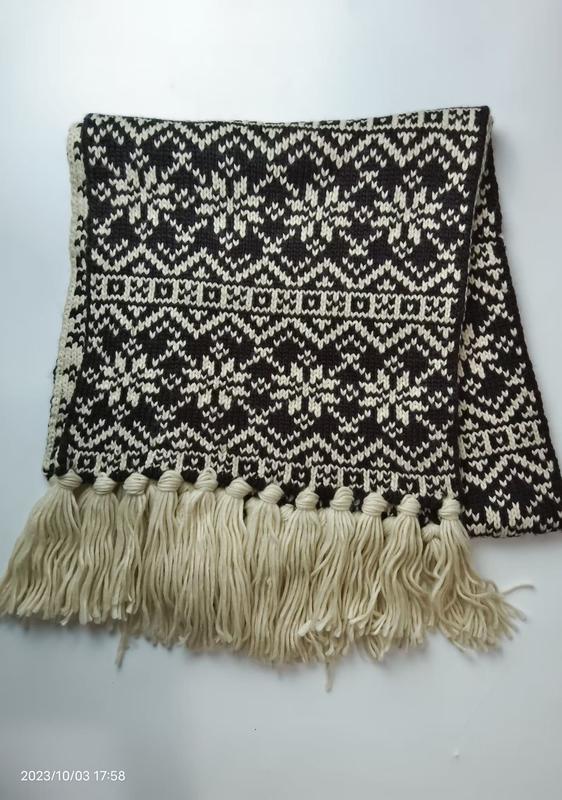
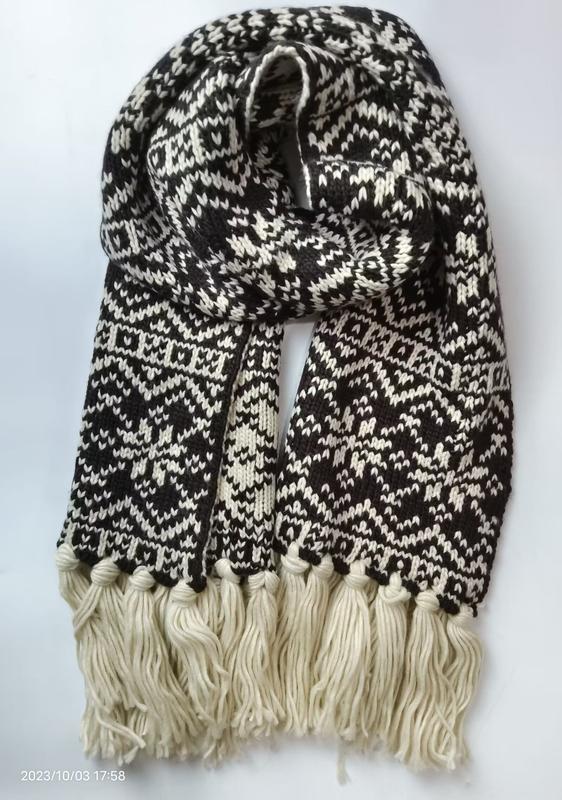
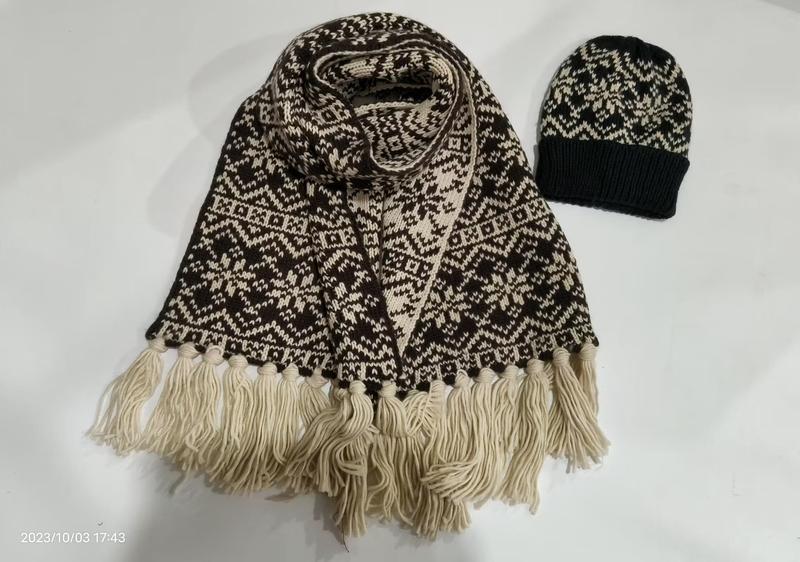
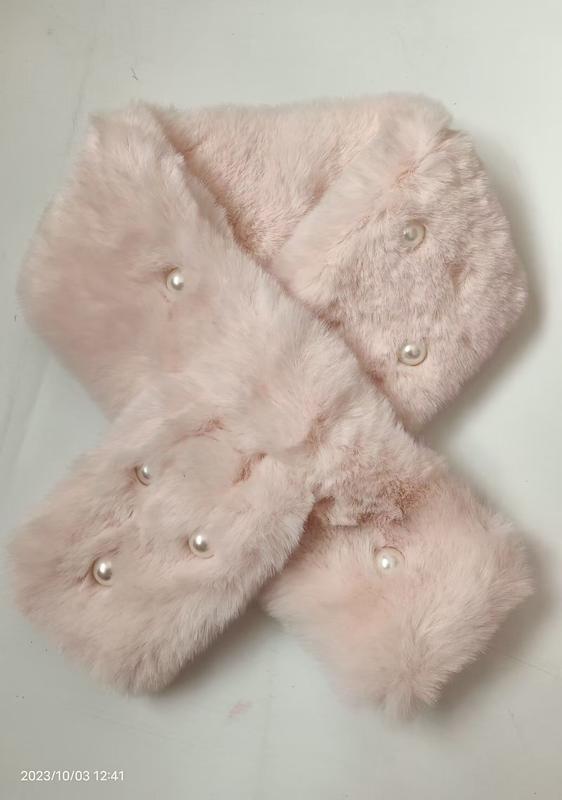
A scarf factory should not treat every scarf as the same product. A Fair Isle jacquard knit scarf, a ribbed winter scarf, a faux fur neck warmer, a shawl, a beanie and a glove set all have different production risks. Jacquard knit scarves need pattern clarity, yarn color control and stable tension. Faux fur scarves need softness, shedding control, pile direction and decoration strength. Ribbed knit scarves need size stability, edge finishing and hand feel. Matching gift sets need color coordination across product types and packing consistency.
Before choosing a supplier, review whether the factory can support the categories you actually want to sell. A buyer building a winter accessory collection should not only ask whether the supplier can make one scarf. The better question is whether the supplier can support a retail program across scarves, hats, gloves and gift sets. Review the wholesale winter accessories catalog and check whether the factory has enough style range to support repeat orders, not only one test purchase.
If your program is mainly scarves, the supplier should explain construction choices. For example, Fair Isle knit scarves use a pattern-driven construction where yarn color and motif clarity matter. A supplier that understands this will ask about the target retail market, color palette and packaging plan before quoting. A supplier that does not understand this may only ask for quantity and then provide an unreliable price.
Compare MOQ with the full scope
MOQ is one of the first questions buyers ask, but it is often misunderstood. MOQ is not only a factory rule. It is connected to yarn preparation, fabric sourcing, machine planning, sampling, label ordering, packing materials and inspection time. A 100-piece order using an existing scarf style with a simple woven label can be practical. A 100-piece order with a new jacquard pattern, three colors, custom hang tags, barcode stickers and gift boxes may not be practical at the same price level.
When comparing factories, ask for price breaks at 100, 300, 500 and 1000 pieces. Then ask what changes at each quantity level. Does the buyer get more color flexibility at 300 pieces? Does the packaging cost drop at 500 pieces? Does the factory require one MOQ per color or one MOQ per order? Can the buyer mix similar colors in one production lot? These answers are more useful than a single low headline price.
Also separate sample cost from bulk MOQ. A professional supplier should be able to explain sample timing, sample charges and whether the sample fee can be credited after a bulk order. If a supplier avoids sample discussion and pushes directly for bulk payment, that is a risk signal.
Use sample approval as the bulk standard
The sample is not only a preview. It should become the reference standard for bulk production. For scarf orders, the approved sample should define size, weight, color, material, pattern clarity, fringe or edge finishing, label placement, hang tag, polybag and carton packing. If the buyer approves only a photo, important details such as hand feel, thickness, pile recovery or label placement may be discovered too late.
For knit scarves, check the scarf flat and folded. For e-commerce, photograph the sample under lighting similar to your product listing setup. For retail stores, check how the scarf looks in the fold or package you will use on shelf. For faux fur scarves, unpack the sample after compression and check whether it recovers shape. For products with buttons, pearls or trims, lightly test attachment strength and ask whether the factory will include that checkpoint in final inspection.
A buyer should also keep a written sample approval record. The record can be simple: approved size, approved color, approved material, label position, packaging method and any tolerance accepted by both sides. This protects the buyer and the factory because both parties know what the bulk order must match.
Supplier proof to request
Supplier proof should match the order type. If you are buying standard wholesale scarves, product photos, material notes and sample review may be enough. If you are building a private label program, you need more. Ask for label examples, hang tag examples, barcode sticker handling, carton mark format and packed-unit photos. If your retailer requires compliance support, ask for current BSCI, OEKO-TEX or GRS documentation and confirm whether the certificate scope matches the product.
Do not treat certificates as decoration. BSCI relates to social compliance context. OEKO-TEX relates to textile testing within certificate scope. GRS relates to recycled material traceability. A factory may have experience with these requirements, but the buyer should still confirm whether the actual yarn, fabric or finished product being ordered is covered.
Useful proof includes: recent production photos, sample photos from similar styles, QC checklist examples, certificate copies, packing photos and a clear explanation of lead time. A supplier that can show these items usually has a better process than a supplier that only sends catalog images.
Communication and quotation quality
Communication speed is part of supplier quality. A good supplier asks practical questions before quoting: quantity, destination country, target delivery date, label requirement, packaging requirement and whether the order is for retail, e-commerce, gifts or promotional use. These questions show that the supplier is thinking about production reality, not only trying to send a fast number.
A useful quotation should include product description, material, size, MOQ, price tier, sample lead time, bulk lead time, packaging assumption, payment terms and validity period. If the quote does not state what is included, it is easy for hidden costs to appear later. Buyers should be cautious when comparing a quote that includes labels and packed-unit inspection with another quote that only includes the scarf body.
What to send before requesting a quote
- Product photo, sketch, link or artwork file.
- Target quantity and expected reorder plan.
- Material preference or target price range.
- Size, color and pattern requirements.
- Logo, woven label, care label, hang tag or barcode needs.
- Packaging method, carton mark and destination country.
- Target delivery date and preferred shipping method.
The more complete the brief, the better the quote. A reliable factory can still help refine the brief, but the buyer should provide enough context for a meaningful answer. The goal is not only to find a supplier. The goal is to build a repeatable scarf sourcing process that protects margin, delivery and retail quality.
Factory or trading company: how to judge the real fit
Buyers often ask whether they should work directly with a factory or through a trading company. The practical answer depends on the order. If the buyer needs one or two standard styles and the main goal is quick sourcing, a trading company may be acceptable. If the buyer needs repeat production, private label control, consistent labels, sample records and long-term color continuity, factory communication becomes more valuable. A factory can usually explain the limits of yarn, knitting, trimming and packing more directly because it is closer to production.
That does not mean every factory is automatically better. A weak factory can still communicate poorly or lack export experience. The buyer should judge the supplier by process, not by title. Ask who prepares the sample, who checks bulk production, who confirms labels, who handles final inspection and who answers when there is a problem. If the supplier can explain each step clearly, the relationship is easier to manage.
A safer first order strategy
For a new supplier, the first order should test the production relationship, not only the product. Choose a style that represents your real business but does not expose the whole season to risk. A neutral knit scarf, a faux fur neck warmer, a ribbed beanie or a matching gift set can all work as a first order if the scope is clear. Keep the first order focused: one or two colors, one label method and a standard packing method. After the factory proves sample accuracy, communication speed and bulk consistency, the buyer can add more colors, packaging and categories.
A reliable manufacturer will not be offended by a controlled first order. In fact, serious factories usually prefer buyers who scale gradually with clear standards. The first order should leave both sides with a repeatable production file: approved sample, confirmed material, label artwork, packing instruction and inspection expectations. That file becomes the basis for future seasonal programs.
FAQ
What is a good MOQ for wholesale scarves?
For this type of B2B scarf program, a practical trial MOQ often starts around 100 pcs per style, while better pricing usually comes from 300 to 1000 pcs depending on material and customization.
Should I choose a trading company or factory?
A factory is usually stronger for repeat production control, sampling and customization. A trading company may help with wider sourcing, but buyers should still verify production capability and QC process.
What should I send before requesting a scarf quote?
Send product photos or artwork, target quantity, material preference, label and packaging requirements, destination country and deadline.
Need a factory quote?
Send your quantity, target market and packaging requirements for a factory scarf quote.
Send RFQ