Private Label
Private Label Scarves: Labels, Hang Tags and Packaging Checklist
Private label scarves should be planned as finished retail units, not only scarf bodies. Buyers need to confirm woven labels, care labels, hang tags, barcode stickers, polybags, gift boxes and carton marks before the production sample is approved.
Buyer Takeaways
- Define labels and packaging before sampling, not after bulk production starts.
- Check care label wording against material and destination market.
- Barcode, hang tag and carton mark details affect packing time and inspection.
- Approve one finished packed sample as the retail standard.
Private label scarves should be treated as finished retail products, not simply scarf bodies with a logo attached. The buyer's brand appears through woven labels, care labels, hang tags, barcode stickers, polybags, gift boxes and carton marks. If those details are planned late, the order can face delays, relabeling cost, packing mistakes or compliance risk. A strong private label program starts before the first sample is made.
Private label decision table
| Area | Define before sampling | Risk if delayed |
|---|---|---|
| Brand label | Label type, size, position and artwork | Sample must be reopened or remade |
| Care label | Fiber content, care symbols, origin and language | Incorrect claim or retailer rejection |
| Hang tag | Artwork, material, attachment method and claim wording | Late printing and inconsistent presentation |
| Barcode | Sticker size, placement and scan readability | Warehouse receiving problems |
| Carton mark | PO, SKU, quantity and destination details | Shipping and warehouse confusion |
Brand labels
The first private label decision is the brand label. Common options include woven labels, printed labels, leather patches, rubber patches and heat-transfer labels. For knit scarves and beanies, woven labels are often a practical choice because they feel durable and retail-ready. For faux fur scarves, label position must be chosen carefully so the label does not disturb hand feel or appearance.
Label placement should be approved on a real sample. A label that looks correct in a flat mockup may be hidden when the scarf is folded for retail display. For beanies, the label should remain visible when the cuff is folded. For matching sets, the buyer should decide whether each piece has its own label or whether the set uses one main brand tag.
Care labels and material claims
Care labels are not decoration. They carry fiber content, care instructions and sometimes origin information. The label must match the actual material used in production. If the buyer changes from acrylic to wool blend, the care label may need to change. If the buyer wants to mention recycled material, OEKO-TEX or other certification claims, those claims should be checked against certificate scope before printing.
For B2B scarf buyers, this is especially important because the product may be sold across different markets. A care label that works for one destination may not be enough for another retailer. The safe approach is to confirm destination market, material composition and label wording before sample approval.
Hang tags and barcode stickers
Hang tags tell the brand story at retail. They can include logo, product name, material, care guidance, sustainability notes and price barcode. Barcode stickers support warehouse receiving, e-commerce fulfillment and retailer systems. These details affect production because the factory needs to attach them consistently and inspect them before shipment.
Buyers should send barcode files and hang tag artwork in final format. If the barcode must be scanned by a retailer system, test scan readability on the packed sample. If hang tags use claims such as recycled yarn or certified material, confirm the supporting documentation before printing. Do not wait until bulk scarves are finished to prepare these files.
Polybags, gift boxes and carton marks
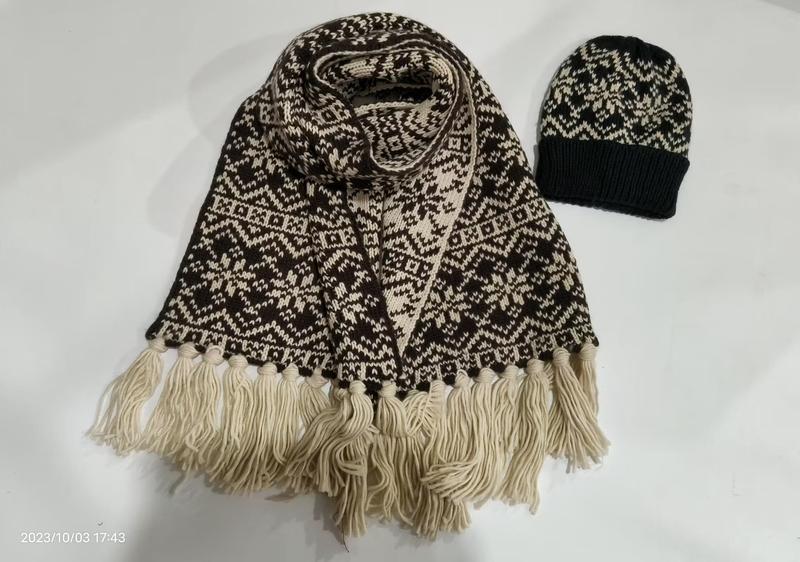
Packaging changes both product presentation and logistics. A simple polybag protects the scarf during transport and is practical for wholesale or e-commerce. A gift box increases perceived value but also increases carton volume and sometimes MOQ. Matching sets such as Fair Isle knit scarf and beanie sets may need a different folding method and box size than a single scarf.
Carton marks are just as important. They help the warehouse identify PO number, SKU, color, quantity and destination. Incorrect carton marks can create receiving delays even when the products inside are correct. Buyers should provide carton mark requirements before packing starts.
Approve the packed sample
A private label sample should not be approved only as an unpacked scarf. The buyer should approve one complete packed unit: scarf, label, care label, hang tag, barcode sticker, polybag or box, and any set components. This packed sample becomes the standard for bulk production and final inspection.
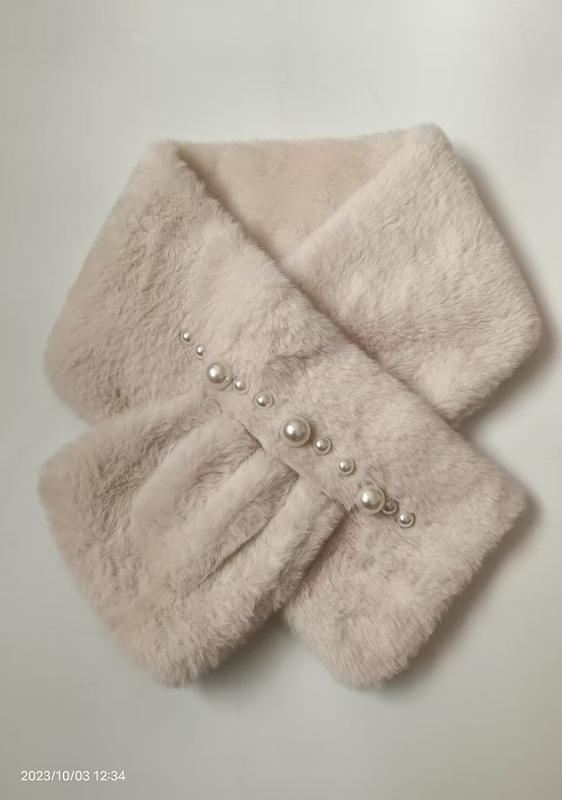
For products with decorative details, such as faux fur scarves with pearl buttons or gift-style sets, packed appearance is critical. Compression can change how a scarf looks after opening. The buyer should check whether the product recovers shape, whether the label is visible and whether the packed unit looks like a retail product.
Buyer checklist
- Final logo file and label artwork.
- Care label wording based on actual material.
- Hang tag artwork and attachment method.
- Barcode sticker size, placement and scan test.
- Polybags, gift boxes or other packing method.
- Carton mark format and warehouse instructions.
- One complete packed sample approved before bulk.
Private label work adds complexity, but it also increases brand value when handled correctly. The key is timing. Bring labels and packaging into the conversation before sampling, not after the factory has already started bulk production.
Retailer requirements should be collected before artwork
If the scarves are going into a retailer, marketplace, distributor warehouse or corporate gift program, the buyer should collect those requirements before designing labels. Many retail systems have barcode, carton mark, polybag warning, SKU and packing rules. If those rules arrive after production is complete, the factory may need to relabel goods or repack cartons. That creates cost and delay even when the scarves themselves are correct.
For e-commerce sellers, product packaging also affects fulfillment. A scarf that arrives folded consistently is easier to store, photograph and ship. A gift box may look better but can increase shipping volume. A private label buyer should decide whether the packaging is mainly for protection, warehouse handling or customer presentation. Each goal leads to a different packaging choice.
Label position changes by product type
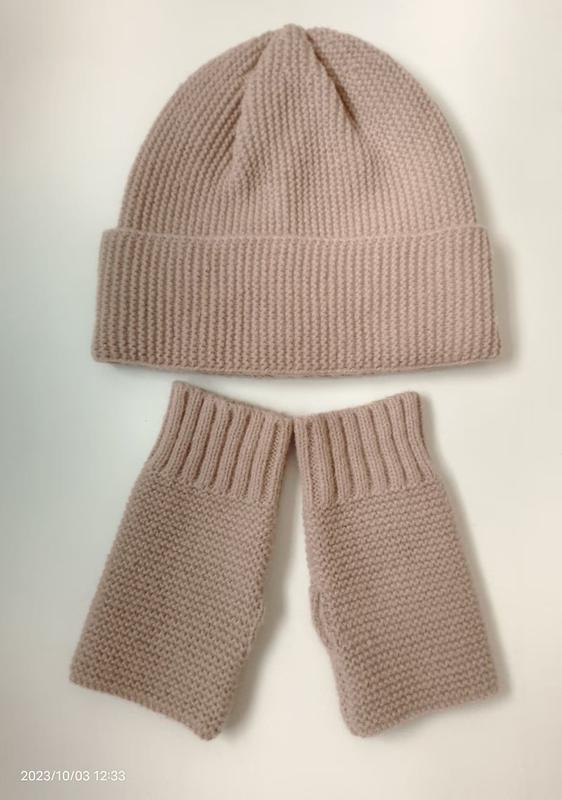
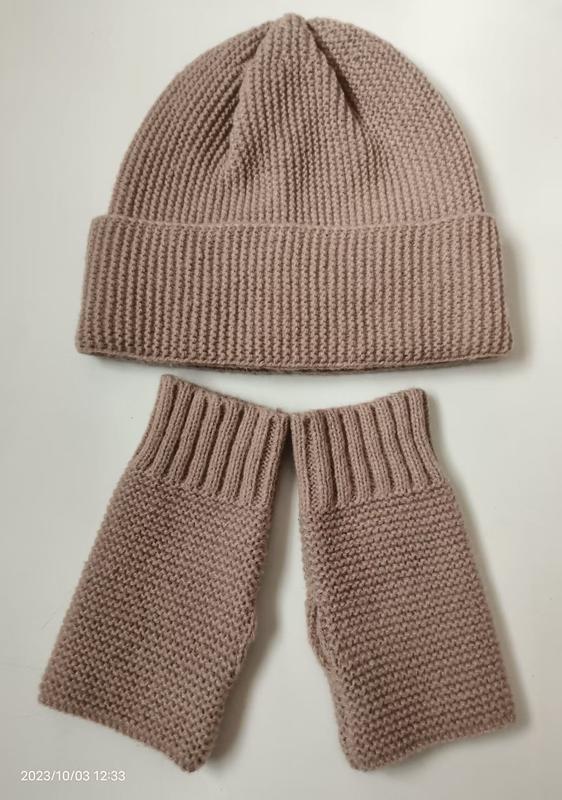
Label placement should be decided by how the product is worn and displayed. On a long knit scarf, the label often sits near one end so it is visible when folded. On a faux fur crossover scarf, the label should not scratch the neck or interfere with the closure. On beanies, the label must align with the cuff. On gloves and sets, the buyer may choose one main hang tag rather than labeling every small piece.
These decisions should be visible in sample photos and in the approved sample record. A common mistake is approving label artwork but not label position. The artwork may be correct, but the finished product still feels wrong if the label sits too high, too low, or disappears inside the fold.
Private label inspection is more than product inspection
Final inspection for private label scarves should check the complete selling unit. Inspectors should review scarf size, color, material and finishing, but they should also check label position, label spelling, care label content, barcode readability, hang tag placement, polybag condition, carton quantity and carton mark accuracy. A shipment can fail warehouse receiving even if every scarf body is well made.
Buyers should ask the supplier to include packed-unit photos before shipment. Photos should show front view, label detail, hang tag, barcode, polybag, carton mark and carton arrangement. This documentation is useful if the buyer has multiple internal teams: sourcing, design, warehouse and e-commerce. Everyone can see what will arrive before the goods leave the factory.
How to control private label cost
Private label does not have to be expensive, but it must be organized. The buyer can control cost by using one label size across several products, keeping hang tag materials standard, choosing a common polybag size where possible and avoiding unnecessary box packaging for low-margin items. Save gift boxes for products where presentation increases retail value. Use simpler packaging for volume basics.
The strongest private label programs balance brand presentation with operational simplicity. They look consistent to the customer but remain practical for the factory to produce and pack. That balance is what turns a scarf order into a repeatable branded accessory program.
Common private label mistakes
The first mistake is treating the logo as the whole brand program. A logo label alone does not make the product retail-ready. The second mistake is approving a scarf body before approving care labels and packaging. The third mistake is changing material after label artwork has already been printed. The fourth mistake is assuming the factory knows the buyer's warehouse rules without being told.
These mistakes are preventable. Put label, packaging and warehouse requirements into the original RFQ. Ask the factory to quote the product as a packed unit, not only as an unpacked scarf. Keep a simple approval sheet that records label artwork, label position, hang tag file, barcode file, polybag method, carton mark and final packed sample photo. This gives both sides a clear standard.
How to scale from one style to a collection
After the first private label scarf is approved, use the same system across related products. One woven label size can often work across scarves, beanies and gloves. One hang tag format can support the whole winter accessories line. One barcode and carton mark process can make warehouse receiving easier. This is how a single scarf order becomes a repeatable private label collection.
Scaling does not mean adding complexity too quickly. Start with one or two hero products, confirm sell-through, then add colors, sets and gift packaging. The strongest private label programs grow through repeatable standards, not constant reinvention.
FAQ
Do private label scarves need a separate packaging sample?
Yes. Buyers should approve the scarf and the final packed unit, especially when hang tags, barcode stickers or gift boxes are required.
Can the factory add my woven label?
Yes, but label size, material, position and artwork should be confirmed before sample production.
Can packaging affect MOQ?
Yes. Custom packaging can increase MOQ or preparation time because printed tags, labels and bags have their own setup requirements.
Need a factory quote?
Send your logo, label artwork and packaging requirements for a private label quote.
Send RFQ